Showing posts with label HEALTH. Show all posts

Thursday, September 14, 2017

What is lupus and why does it occur 10 times more in women than men?


An autoimmune disease, it can turn fatal if not treated early 

If you are a young woman and having a butterfly-shaped rash on cheeks, coupled with fever, joint pains and fatigue, better watch out! It probably is Lupus, an auto-immune disease, which could turn fatal if not treated early.

Lupus is a chronic disease. It causes inflammation (pain and swelling), affects the skin, joints, kidneys, lungs, nervous system and other organs of the body. It mostly affects women in their 20s and 30s and occurs 10 times more in women than men. The other symptoms include weight loss, blood clots, poor circulation to fingers and toes. Pregnant women could have miscarriages.

In Lupus, the immune system, which normally protects the body by making antibodies that attack foreign germs and cancers, starts producing auto-antibodies targeting the patient's own tissues. “We are seeing more patients with the disease now,” said Dr. Raj Kiran, Consultant Rheumatologist, CARE hospitals. However, due to lack of awareness, patients were turning up late when the disease has progressed and affected vital organs like kidneys. Describing it as a “peculiar disease”, he said it needed more attention because young women in childbearing age were affected.

Side effects

If untreated, the disease would progress and the patient would die. At the same time, medications for the treatment cause side effects. Unlike in many other cases, Lupus patients require constant monitoring as the disease could flare up suddenly. A judicious balance needed to be maintained to prevent its progress and reduce side effects of drugs. While no definitive data is available in India, the prevalence could be one in every thousand, he added. The mortality rate could be one in 100 patients if vital organs like kidneys or brain were affected. It mostly gets triggered by some infection, environmental changes and at times by drugs. However, drug-induced Lupus would be mild most of the times, he added.

With women from weaker sections increasingly getting affected, Dr. Raj Kiran said that he planned to establish a foundation with the help of NGOs to extend support to such patients as the treatment was quite expensive. The foundation would also take up research and build data on Lupus patients.


Monday, October 31, 2016

Lupus and Tendonitis


Lupus and Tendonitis

Inflammation is the most common reason for muscle pain and aches. Any time that major inflammation exists ("strep" throat, hepatitis, cancer, lupus, acute heart attack, etc.), signs and symptoms often include fevers, sweats, chills, fatigue, weight loss, and various muscle aches, pains and weakness. These non-specific, non-diagnostic symptoms are signs of your body's inability to cope with whatever process has overwhelmed it. Because lupus is an inflammatory disease it may cause any of these problems. These myalgias are a secondary part of the overall disease.

What AreTendons?

Tendons are tough, flexible, fibrous bands of tissue that connect muscles to bones. When tendons become inflamed, irritated or suffer microscopic tears, the condition is called tendonitis. Tendons can be small, like the delicate, tiny bands in the hands, or large, like the heavy, ropelike cords that anchor the calf or thigh muscles. In most cases, the cause of tendonitis is unknown; when a cause can be identified, the condition usually happens for one of two reasons: 

  • Overuse – A particular body motion is repeated too often.
  • Overload – The level of a certain activity, such as weightlifting, is increased too quickly.

Rarely, tendonitis is caused by an infection, such as gonorrhea. Tendonitis is most common in the shoulder, elbow, knee, wrist and heel, although it can happen anywhere that tendons are found in the body. For uncertain reasons, tendonitis is also common in people with diabetes. In recent years, a rare cause of tendonitis (or other tendon disease, including rupture) has been recognized: the use of certain antibiotics, including ciprofloxacin or levofloxacin. Why this happens is unknown

A tendon is a strong rope-like structure made of tough fibers that attaches muscle to bone. A bursa is a small sac containing a slippery fluid that is usually found near a joinand allows muscles, bones, and tendons to move easily. Tendonitis (irritation of a tendon) and bursitis (irritation of a bursa) are usually due to damage or overuse of a joint. Pain is the major symptom of both conditions. Different areas of your body may be affected; common areas include the elbow (tennis elbow), the finger (trigger finger) and the shoulder. In addition, tendons and bursas are both lined with synovial membrane, which is a target for inflammation in lupus arthritis.


Monday, June 13, 2016

Arachnoiditis Often Misdiagnosed as Chronic Back Pain

Arachnoiditis Often Misdiagnosed as Chronic Back Pain

An arachnoid is a membrane that covers and helps protect the nerves of the spinal cord. When these membranes becomes inflamed it can lead to pain, burning, tingling, and even neurological problems. Long-term sufferers experience bowel dysfunction, autoimmune disorders, and even lower-extremity paralysis. Until now, there have been no common symptoms used to diagnose this condition. Clinicians did know that it usually affects the nerves of the legs and back. But now a new report finds that many of those suffering from arachnoiditis are often misdiagnosed with mere chronic back pain.

Those who have leg tremors or experience intense pain after standing for too long are now thought to have this condition. Forest Tennant, MD was the lead author in this study. He is a pain specialist from the Veract Intractable Pain Clinic in West Covina, Calif. Dr. Tennant said that those patients who come in complaining of severe back pain, and have an inability to stand for long periods without having to sit or lie on the floor, could have arachnoiditis.

Tennant conducted this study to help better understand and identify the symptoms of this worrisome condition. He recruited 26 patients who were diagnosed with the spinal cord disease via an MRI. Next, he examined what specific symptoms they reported. Patients all talked about tremors in the legs, and having to sit or lie down after standing for too long. Most patients also had difficulty defecating and urinating, felt increased episodes of intense heat and sweating, and occasionally experienced blurred vision. Never before has consistent symptoms for arachnoiditis been isolated like this.

There are many causes to the condition including compressed nerves in the spine, back injury, infection, exposure to certain chemicals, and more. Researchers say though uncommon, the condition very often goes undiagnosed. Spinal manipulations, epidurals, and spinal taps have increased over the last decade, and Dr. Tennant wonders if these are contributing to the increase in arachnoiditis cases. If you suffer from chronic back pain be sure to visit a doctor or specialist. You never know what may be causing it, how serious it is, and to what extent you are in need of medical intervention.


Sunday, May 15, 2016

Suffering the Silence

Hey lupies,

Be sure to check out this awesome video of two young girls, best friends, who both suffer from chronic illnesses. Ally who battles Lyme disease and Erika who battles Lupus. 
See how they’ve started a movement and have inspired millions of others suffering in silence to speak up and speak out!

Saturday, April 9, 2016

Tuesday, March 29, 2016

To Try Especially For Auto Immune Warriors


Spring is finally upon us, well not 100% up here in Connecticut but I’ll take the little spring we are getting. This year I am hoping for a year of great weather which means a normal life and happy days of being pain free. As you know my life is in the control of the weather, food, stress and exhaustion. So, if I don’t want any lupus flare ups beside those 4 key element and the many meds I take I have to watch what I do to my body as well as put on my body. I’m always looking for the next best thing when it comes to natural skin care.


Recently, I chatted with Beauty Expert Ilse from Live Learn Luxe  and she shared with me some new natural products to try. As Ilse explained to me it’s not about the words “organic & natural” it’s all about the ingredients found in the products. These words are not friendly to anyone with an auto immune disease; PARABENS, SULFATES, TRICLOSAN, and PHTHALATES. Here are four of Ilse all-star favorite new must have chemical free products I should invest in that would not trigger my lupu


Ilse is not a medical doctor, she’s a friend who gives me guidance when it comes to my skin care needs. As I spring clean my dressing room I’ll be spring cleaning my shelf of old skincare products and bad skincare products. Once I pick up these items, I will have a review for you once I’m done…hang in there my lupus warriors!

Wednesday, December 30, 2015

Teaser! Toni Braxton's Lifetime Movie 'Unbreak My

Lifetime has released its very first trailer for Toni Braxton’s “Unbreak My Heart” movie. Toni’s story, including her battle with lupus, is the focus of the new Lifetime movie premiering January 2016.

Monday, November 23, 2015

Exercises to Help Manage Back Pain


When we suffer from back pain all we want to do is sit still in a position that doesn’t cause pain. But in fact, this is liable to worsen it. Strengthening the muscles in other areas helps support the body and takes weight off the spine, leading to better posture and less pain. SomTetimes when we begin exercising and we have back pain, we can feel a pinching or another slight pain. But as your muscles grow in strength back pain and pain while exercising should decrease. If you feel a significant pain lasting for longer than 15 minutes during the routine call your physician.
Be sure to stretch and warm up a little first. Avoid toe touches however. This exercise stresses the ligaments and disks in the spine and could make your pain worse. If you have lower back pain, partial crunches are good. They will strengthen the muscles in the back and stomach. Here you lie on the floor crossing your arms in front of you. You tighten your abdominal muscles and lift yourself up. Take a breath every time you rise and breathe out as you descend. Don’t use your elbows or arms to lift up. Make sure your feet are flat and that your tailbone never leaves the mat. Do eight to 12 of these and slowly increase as you get used to doing them.
Sit-ups are actually not so good. They put pressure on the spine and only really exercise the hips. Hamstring stretches are good for the back. Lie down and take a towel about the size of a hand towel with you. Put it on the middle of the bottom of your foot. Extend your leg out slowly and hold on to each end of the towel, guiding the leg up. Hold for 30 seconds then bring it down again. Do each leg two to four times. Practice these and you’re bound to notice the difference.
Talk to your doctor before taking on a new regimen of exercises for your condition, and see which ones are right for you. For serious conditions a physical therapist may be necessary. For others, a personal trainer who knows how to accommodate back conditions also proves helpful. Exercises that are not recommended for your condition could actually make it worse, so make sure to discuss the issue at length with a professional.

Friday, November 20, 2015

Protect Yourself this Cold & Flu Season


Temperatures are dropping and the holiday season is upon us! 


downloadAlthough we’re immersed in quite a magical time of year, it’s also the beginning of cold and flu season. Not so magical after all!
When you have lupus, you have to take extra precautions to protect yourself from viruses. Not only will you feel horrible from the illness itself, but the virus could potentially provoke a flare! A double whammy during such a busy time of year! Not to mention, the use of strong immune suppressants may put some of you at a higher risk for contracting a virus. This is because the goal of lupus treatment is to suppress an overactive immune system so that it does not produce auto (self) antibodies that cause lupus symptoms. When your immune system is suppressed, you have the potential for increased chances of catching viruses and infections.
With that being said, what are the best ways to avoid catching a cold or the flu? A good starting point is to discuss the annual flu vaccine with your doctor.
While nothing is 100% fool proof, some simple steps you may want to keep in mind to help lessen the possibility of getting a cold, the flu or other viruses include:
  • Avoid anyone- including family members- with symptoms of fever4_065_ColdFluRescue (over 100° F), nausea, vomiting, or diarrhea. Specifically you should avoid close, personal contact such as hugging, kissing, and shaking hands.
  • Wash your hands (tops, palms and fingers) frequently with hot, soapy water for at least 15 seconds.
  • Remember that surfaces- especially in bathrooms, on shared office equipment, on store countertops, gas pump handles, any surface of the car, and in restaurants- can expose you to germs. Keep alcohol-based gel or wipes handy, both out in public and at home.
  • Avoid touching your eyes, nose or mouth. Germs spread this way
  • Shield coughs or sneezes with the crook of your arm. Do not use your hands or handkerchiefs as they carry moisture and spread viruses.
  • Stay home from work or school if you are sick.
  • Please remember that you should never discontinue medications used to treat your lupus without first consulting your doctor!

Thursday, November 5, 2015

4 Steps to Manage Your Lupus for Life

1446657907514
1. Learn About Lupus - Learn as much as you can about lupus and the effects it can have on your body. Don't be overwhelmed or angry as you learn. Since lupus is a disease of varying issues it's important to know that every lupus journey is different.
2. Know Your Lupus ABCs - A - Know ALL of your tests and levels. Work with your doctor to find out what tests they are taking and why. Keep on track of your levels as they show inflammation and other things that happen in your body. B- BLOOD PRESSURE If your blood pressure gets too high, it makes your heart work too hard. It can cause a heart attack, stroke, and damage your kidneys and eyes. C - CARING for your self. Find out how you can properly care for yourself while battling lupus on a daily basis.
3. Learn How to Live with Lupus -It is common to feel overwhelmed, sad, or angry when you are living with lupus. Learn to cope with lupus through limiting your stress, eating healthy, being active and sticking to the plan of treatment every day.
4. Get Routine Care to Stay Healthy - See your health care team to find and treat any problems early. You will see many doctors, so make sure you are communicating well with every doctor and keeping them in your lupus loop together. Don't feel intimidated to be your best healthcare advocate.
#LupusInColor

Tuesday, October 20, 2015

Wellness

Just because lupus makes you sick doesn't mean you aren't well. Wellness is a state of mind that can help you beat lupus. Get to a wellness of mind and spirit,  it is essential to get the upper hand over lupus. #LupusInColor

Monday, October 12, 2015

At the gym, let go of the handrails on the treadmill!

Because when we grab onto the handrails, we have a tendency to lean back. And people who do that burn significantly fewer calories. That’s because, when we walk up a real hill, we lean forward – which works our calf muscles, glutes and hamstrings. It also increases our calorie burn. If you grab on for dear life and lean back, you don’t get any of that. So, if you can’t let go, you either need to slow down or decrease the incline.

Saturday, October 10, 2015

Monday, October 5, 2015

Sometimes combining certain foods can improve their health benefits.

avotomato-wp
Like: Avocado and Tomato. Tomatoes are loaded with the antioxidant lycopene. But when you combine tomatoes with avocado, the unsaturated fat in the avocado helps the body absorb SEVEN TIMES the normal amount of lycopene! And lycopene inhibits the production of cancer cells.
Another good combo: Grilled steak and Brussels sprouts. There are compounds in Brussels sprouts which help the body flush out carcinogens. Including the carcinogens which form on charred meat during grilling.
Finally: Here’s a BAD food combo… Alcohol and energy drinks. Caffeine is a stimulant, while alcohol is a depressant. And when you overload your body with both at the same time, it puts tremendous stress on your heart… So don’t even think about ordering a Red Bull and Vodka.

Monday, September 28, 2015

CHANGE YOUR FOCUS

Don’t always focus on what lupus pain was in your body or the pain that has yet to come. Take time to create conscious thoughts on the wellness within you and invite your focus to be in ‘I am well ‘ mode. It’s going to be hard to do, but your body, mind and soul will thank you and be in a position to return the favor by feeling a bit better. When we control our  thoughts our body can follow. It won’t totally remove lupus from your person, but it will give you a little reprieve. Change your focus, change your struggle and increase power into your battle over lupus

Tuesday, September 15, 2015

While battling Lupus you need

While battling Lupus you need Hope, Courage, A Sense of Humor and a Positive Attitude. Whatever it takes, do what you have to do to bring those things with you as you fight. It makes a world of difference in beating Lupus each day.

Thursday, September 10, 2015

Avocado Spinach “Pasta” Sauce – AIP/Paleo/Gluten Free/Vegan IN SEARCHOF SIMPLICITY: by MY JOURNEY WITH LUPUS

Originally posted on The Bumpy Road To A Simple Life:

Avocado’s are delicious but they have a very short shelf life. When they are ripe you need to eat them right away as they go bad really quickly. The other night I had an avocado that needed to be eaten before it went to waste. It was already too soft to put on a salad so what should I did with it?
I’ve used avocado in many different things – icing, smoothies, mayo, muffins, but never in a sauce but I new it’s creamy texture would be perfect. I searched the web and found a few interesting recipes but they either all had a lot of fresh basil or ingredients I am not currently allowed to eat. So I decided to make my own.
This was so yummy even my son ate it and he does not like avocado. It will become a staple in our house moving forward.
So here is the recipe:
Avocado Spinach “Pasta” Sauce
1 ripe avocado
a big handful of spinach (around 1 – 2 cups)
3 cloves of garlic
juice of half a lemon
1/4 cup olive oil
1/2 tsp salt
1/2 tsp basil
  1. Start by cooking your spaghetti squash.I do this by cutting it in half, scooping the seeds, and placing them inside down in a pan with a bit of water. Then I cook at 375 F for about 30 – 40 minutes.
  2. Place all ingredients into a blender or food processor, I use a vitamix. Blend until smooth.
  3. Heat a pan on medium heat with a little oil – coconut, avocado, etc… Add the squash and saute slightly. Pour sauce over squash and heat through stirring often. This only takes about 5 minutes. This step means you’ll have a nice warm dish and prevents any leftovers from browning the next day.
  4. Serve and enjoy.
Hope you enjoy!
Sabrina

Monday, August 31, 2015

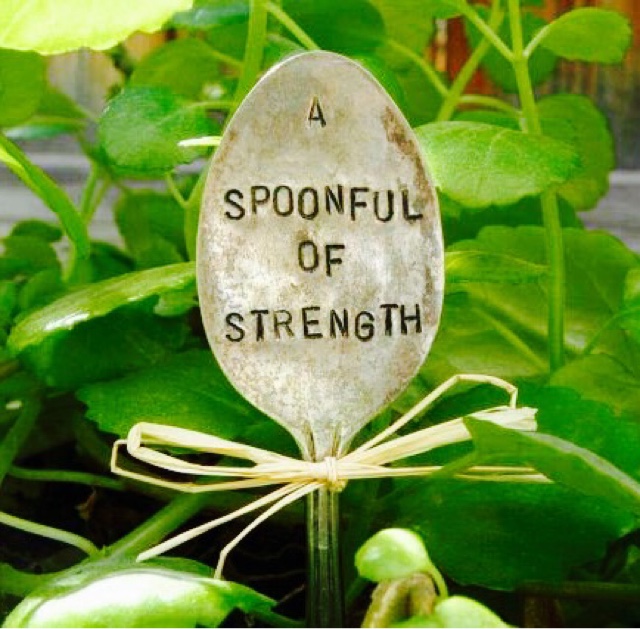
The Spoon Theory

The Spoon Theory by Christine Miserandino 

SpoonGirlHat-150x150My best friend and I were in the diner, talking. As usual, it was very late and we were eating French fries with gravy. Like normal girls our age, we spent a lot of time in the diner while in college, and most of the time we spent talking about boys, music or trivial things, that seemed very important at the time. We never got serious about anything in particular and spent most of our time laughing.
As I went to take some of my medicine with a snack as I usually did, she watched me with an awkward kind of stare, instead of continuing the conversation. She then asked me out of the blue what it felt like to have Lupus and be sick. I was shocked not only because she asked the random question, but also because I assumed she knew all there was to know about Lupus. She came to doctors with me, she saw me walk with a cane, and throw up in the bathroom. She had seen me cry in pain, what else was there to know?
I started to ramble on about pills, and aches and pains, but she kept pursuing, and didn’t seem satisfied with my answers. I was a little surprised as being my roommate in college and friend for years; I thought she already knew the medical definition of Lupus. Then she looked at me with a face every sick person knows well, the face of pure curiosity about something no one healthy can truly understand. She asked what it felt like, not physically, but what it felt like to be me, to be sick.
As I tried to gain my composure, I glanced around the table for help or guidance, or at least stall for time to think. I was trying to find the right words. How do I answer a question I never was able to answer for myself? How do I explain every detail of every day being effected, and give the emotions a sick person goes through with clarity. I could have given up, cracked a joke like I usually do, and changed the subject, but I remember thinking if I don’t try to explain this, how could I ever expect her to understand. If I can’t explain this to my best friend, how could I explain my world to anyone else? I had to at least try.
At that moment, the spoon theory was born. I quickly grabbed every spoon on the table; hell I grabbed spoons off of the other tables. I looked at her in the eyes and said “Here you go, you have Lupus”. She looked at me slightly confused, as anyone would when they are being handed a bouquet of spoons. The cold metal spoons clanked in my hands, as I grouped them together and shoved them into her hands. I explained that the difference in being sick and being healthy is having to make choices or to consciously think about things when the rest of the world doesn’t have to. The healthy have the luxury of a life without choices, a gift most people take for granted.
Most people start the day with unlimited amount of possibilities, and energy to do whatever they desire, especially young people. For the most part, they do not need to worry about the effects of their actions. So for my explanation, I used spoons to convey this point. I wanted something for her to actually hold, for me to then take away, since most people who get sick feel a “loss” of a life they once knew. If I was in control of taking away the spoons, then she would know what it feels like to have someone or something else, in this case Lupus, being in control.
She grabbed the spoons with excitement. She didn’t understand what I was doing, but she is always up for a good time, so I guess she thought I was cracking a joke of some kind like I usually do when talking about touchy topics. Little did she know how serious I would become?
I asked her to count her spoons. She asked why, and I explained that when you are healthy you expect to have a never-ending supply of “spoons”. But when you have to now plan your day, you need to know exactly how many “spoons” you are starting with. It doesn’t guarantee that you might not lose some along the way, but at least it helps to know where you are starting. She counted out 12 spoons. She laughed and said she wanted more. I said no, and I knew right away that this little game would work, when she looked disappointed, and we hadn’t even started yet. I’ve wanted more “spoons” for years and haven’t found a way yet to get more, why should she? I also told her to always be conscious of how many she had, and not to drop them because she can never forget she has Lupus.
I asked her to list off the tasks of her day, including the most simple. As, she rattled off daily chores, or just fun things to do; I explained how each one would cost her a spoon. When she jumped right into getting ready for work as her first task of the morning, I cut her off and took away a spoon. I practically jumped down her throat. I said ” No! You don’t just get up. You have to crack open your eyes, and then realize you are late. You didn’t sleep well the night before. You have to crawl out of bed, and then you have to make yourself something to eat before you can do anything else, because if you don’t, you can’t take your medicine, and if you don’t take your medicine you might as well give up all your spoons for today and tomorrow too.” I quickly took away a spoon and she realized she hasn’t even gotten dressed yet. Showering cost her spoon, just for washing her hair and shaving her legs. Reaching high and low that early in the morning could actually cost more than one spoon, but I figured I would give her a break; I didn’t want to scare her right away. Getting dressed was worth another spoon. I stopped her and broke down every task to show her how every little detail needs to be thought about. You cannot simply just throw clothes on when you are sick. I explained that I have to see what clothes I can physically put on, if my hands hurt that day buttons are out of the question. If I have bruises that day, I need to wear long sleeves, and if I have a fever I need a sweater to stay warm and so on. If my hair is falling out I need to spend more time to look presentable, and then you need to factor in another 5 minutes for feeling badly that it took you 2 hours to do all this.
I think she was starting to understand when she theoretically didn’t even get to work, and she was left with 6 spoons. I then explained to her that she needed to choose the rest of her day wisely, since when your “spoons” are gone, they are gone. Sometimes you can borrow against tomorrow’s “spoons”, but just think how hard tomorrow will be with less “spoons”. I also needed to explain that a person who is sick always lives with the looming thought that tomorrow may be the day that a cold comes, or an infection, or any number of things that could be very dangerous. So you do not want to run low on “spoons”, because you never know when you truly will need them. I didn’t want to depress her, but I needed to be realistic, and unfortunately being prepared for the worst is part of a real day for me.
We went through the rest of the day, and she slowly learned that skipping lunch would cost her a spoon, as well as standing on a train, or even typing at her computer too long. She was forced to make choices and think about things differently. Hypothetically, she had to choose not to run errands, so that she could eat dinner that night.
When we got to the end of her pretend day, she said she was hungry. I summarized that she had to eat dinner but she only had one spoon left. If she cooked, she wouldn’t have enough energy to clean the pots. If she went out for dinner, she might be too tired to drive home safely. Then I also explained, that I didn’t even bother to add into this game, that she was so nauseous, that cooking was probably out of the question anyway. So she decided to make soup, it was easy. I then said it is only 7pm, you have the rest of the night but maybe end up with one spoon, so you can do something fun, or clean your apartment, or do chores, but you can’t do it all.
I rarely see her emotional, so when I saw her upset I knew maybe I was getting through to her. I didn’t want my friend to be upset, but at the same time I was happy to think finally maybe someone understood me a little bit. She had tears in her eyes and asked quietly “Christine, How do you do it? Do you really do this every day?” I explained that some days were worse than others; some days I have more spoons than most. But I can never make it go away and I can’t forget about it, I always have to think about it. I handed her a spoon I had been holding in reserve. I said simply, “I have learned to live life with an extra spoon in my pocket, in reserve. You need to always be prepared.”
It’s hard, the hardest thing I ever had to learn is to slow down, and not do everything. I fight this to this day. I hate feeling left out, having to choose to stay home, or to not get things done that I want to. I wanted her to feel that frustration. I wanted her to understand, that everything everyone else does comes so easy, but for me it is one hundred little jobs in one. I need to think about the weather, my temperature that day, and the whole day’s plans before I can attack any one given thing. When other people can simply do things, I have to attack it and make a plan like I am strategizing a war. It is in that lifestyle, the difference between being sick and healthy. It is the beautiful ability to not think and just do. I miss that freedom. I miss never having to count “spoons”.
After we were emotional and talked about this for a little while longer, I sensed she was sad. Maybe she finally understood. Maybe she realized that she never could truly and honestly say she understands. But at least now she might not complain so much when I can’t go out for dinner some nights, or when I never seem to make it to her house and she always has to drive to mine. I gave her a hug when we walked out of the diner. I had the one spoon in my hand and I said “Don’t worry. I see this as a blessing. I have been forced to think about everything I do. Do you know how many spoons people waste every day? I don’t have room for wasted time, or wasted “spoons” and I chose to spend this time with you.”
Ever since this night, I have used the spoon theory to explain my life to many people. In fact, my family and friends refer to spoons all the time. It has been a code word for what I can and cannot do. Once people understand the spoon theory they seem to understand me better, but I also think they live their life a little differently too. I think it isn’t just good for understanding Lupus, but anyone dealing with any disability or illness. Hopefully, they don’t take so much for granted or their life in general. I give a piece of myself, in every sense of the word when I do anything. It has become an inside joke. I have become famous for saying to people jokingly that they should feel special when I spend time with them, because they have one of my “spoons”.

Friday, August 28, 2015

Need an energy boost? Go for a walk!

Originally posted on ConnieSelleccaBlog:


you find yourself nodding off each day after lunch…Forget trying to get an energy boost from Starbucks or RedBullTake a walk, instead!
Researchers at the University of Birmingham discovered that people who took a short, leisurely walk during their lunch hour got a significant mood boost, had longer attention spans, and were better able to fend off work-related stress than those who consumed caffeine – and the change lasted for several hours. That’s because walking increases oxygen flow to the brain, and boosts the production of energizing, feel-good brain chemicals.